Power outages in Burlington, VT, can happen at any time, especially during winter storms, heavy winds, and periods of ice buildup. For homeowners who rely on electricity for heating systems, refrigeration, well pumps, and everyday necessities, having a backup power system makes a big difference.
An automatic transfer switch (ATS) plays an important role in keeping your home powered during an outage. It works alongside a standby generator to switch your home’s electrical supply from utility power to generator power.
At Hood Electric, we help Burlington homeowners install dependable backup power systems, including generators and automatic transfer switches. Here’s what you should know before installing one.
In this article:
– Automatic Backup Power: Automatic transfer switches keep Burlington, VT homes powered during outages by switching to standby generator power.
– Reliable Home Protection: Keep essential systems like heating, refrigeration, and well pumps running during Vermont power outages.
– Professional Installation: Hood Electric provides automatic transfer switch and generator installation in Burlington, VT, and surrounding communities.
We at Hood Electric specialize in electrical panel upgrades, generator installation, and electrical repairs and troubleshooting in Burlington, VT and surrounding communities. Owner and Master Electrician Nick Hood works directly with homeowners, builders, and contractors to provide dependable electrical work, clear communication, and practical solutions for each property. From upgrades and renovations to backup power and repairs, we focus on work that supports your home for years to come. Contact Hood Electric to discuss your electrical project.
What Is an Automatic Transfer Switch?
An automatic transfer switch is an electrical device that connects your home’s electrical system to two power sources: your utility company and a standby generator.
Under normal conditions, your home receives electricity from the utility grid. If the grid loses power, the transfer switch detects the interruption and signals the standby generator to start.
Once the generator produces stable electricity, the switch transfers your home’s electrical load to generator power.
When utility service returns and stabilizes, the switch reconnects your home to the grid and allows the generator to complete its shutdown cycle.
This process happens automatically, so you don’t have to go outside during a storm to manually switch power sources.
A properly installed transfer switch also prevents generator electricity from feeding back into utility lines, protecting utility workers and electrical equipment.
How Automatic Transfer Switches Work During a Power Outage
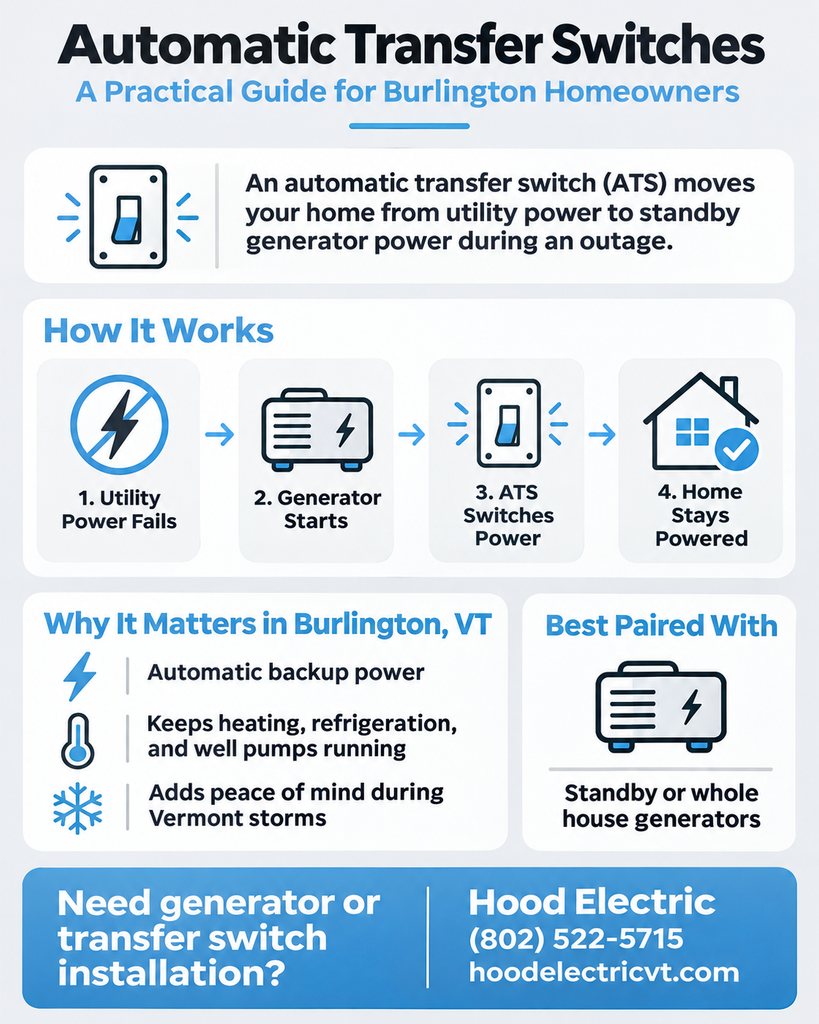
An automatic transfer switch continuously monitors incoming utility power. When it detects an outage, it follows a sequence designed to restore electricity safely.
Here’s what typically happens:
- Utility power fails. The transfer switch detects the interruption in electrical service.
- The generator starts. The switch sends a signal to the standby generator, which begins producing electricity.
- Power transfers. Once generator voltage and frequency stabilize, the switch disconnects the utility source and connects generator power.
- Your home receives backup electricity. The generator supplies power to the circuits included in your backup system.
- Utility power returns. After confirming stable utility power, the switch transfers your home back to the grid and the generator cools down before shutting off.
The entire process typically takes several seconds, depending on the generator and transfer switch settings.
Unlike a battery backup system, a conventional standby generator doesn’t provide uninterrupted electricity. You may notice a brief outage before generator power begins.
Why Burlington, VT Homeowners Benefit From Automatic Transfer Switches
Vermont homeowners face unique challenges when severe weather interrupts electrical service.
Heavy snowfall, freezing rain, and strong winds can damage utility infrastructure. Homes in rural areas outside Burlington may also face longer restoration times when storms affect multiple communities.
An automatic transfer switch paired with a properly sized standby generator offers several practical benefits:
- Automatic backup power: Your generator starts without requiring manual intervention.
- Heating system support: Keep compatible boilers, furnaces, and heating controls operating during winter outages.
- Food preservation: Maintain power to refrigerators and freezers.
- Well pump operation: Supply electricity to private well systems when included in your generator’s capacity.
- Home protection: Keep sump pumps and other important equipment running.
- Convenience: Maintain essential household functions even when you’re away from home.
For homeowners in Burlington, Colchester, Richmond, and surrounding Vermont communities, an automatic transfer switch can make extended outages easier to manage.
Automatic Transfer Switch vs. Manual Transfer Switch
Both automatic and manual transfer switches allow a generator to supply electricity to your home. However, they operate differently.
A manual transfer switch requires someone to physically change the power source after starting the generator.
An automatic transfer switch handles the process without homeowner involvement.
Manual switches are commonly paired with portable generators, while automatic switches are typically installed with permanently connected standby generators.
For homeowners investing in a whole house generator, an automatic transfer switch is often the more convenient option.
It provides reliable switching without requiring you to monitor the electrical system during an outage.
Choosing the Right Transfer Switch for Your Burlington Home
Not every transfer switch works with every electrical system. Choosing the correct equipment depends on your home’s electrical service, generator capacity, and backup power goals.
Electrical Service Size
Many homes have 100-amp or 200-amp electrical service, while larger custom homes may require greater capacity.
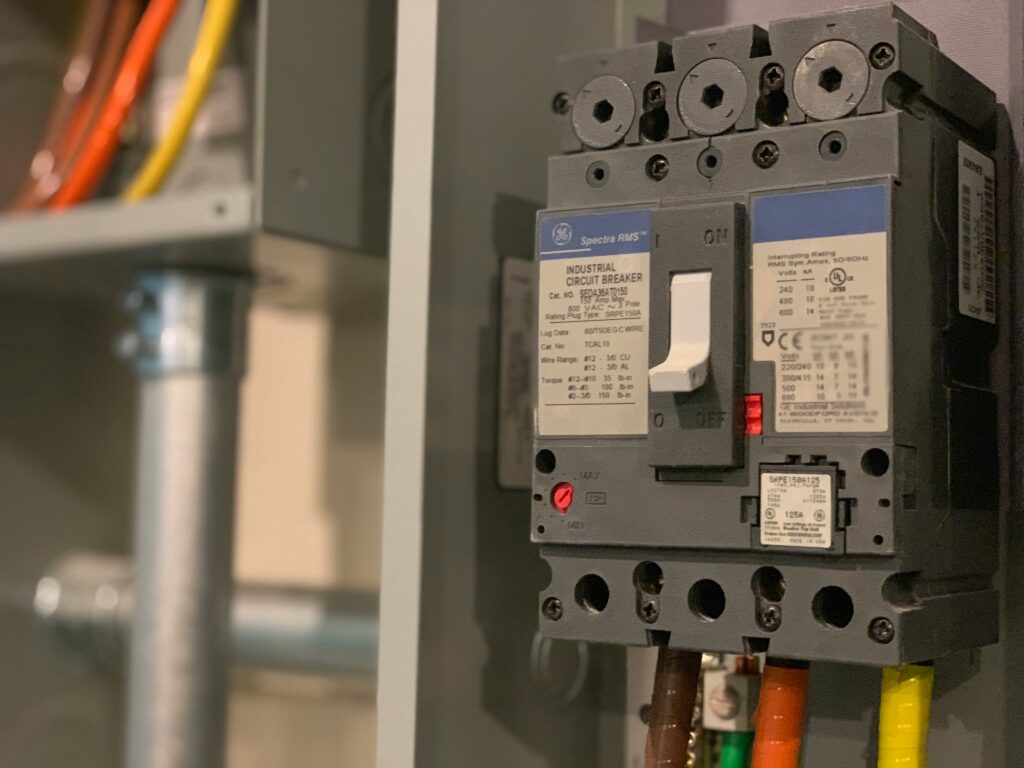
Your electrician must select a transfer switch with the appropriate electrical ratings for its installation location and connected loads.
Whole House vs. Essential Circuit Backup
Some homeowners want their generator to support the entire house. Others only need electricity for heating equipment, refrigeration, lighting, and selected outlets.
A whole house generator system may use a service-rated automatic transfer switch to manage the home’s main electrical supply.
Essential circuit systems may use a smaller transfer switch connected to a dedicated backup panel.
Generator Compatibility
Automatic transfer switches must work with the generator’s control system.
Different manufacturers use specific communication and starting arrangements, so equipment compatibility matters.
Nick Hood can evaluate your home’s electrical setup and recommend a transfer switch that works with your generator and power requirements.
Professional Transfer Switch Installation in Burlington, VT
Installing an automatic transfer switch involves working with your home’s main electrical service and connecting multiple power sources.
This work requires careful planning, proper equipment selection, and compliance with applicable electrical codes.
At Hood Electric, owner and Master Electrician Nick Hood handles electrical installations personally. You communicate directly with the electrician performing the work, from the initial discussion through installation.
A typical transfer switch installation involves reviewing your electrical panel, evaluating generator compatibility, selecting the correct switch, completing the electrical connections, and testing the system.
Some homes may also need an electrical panel upgrade or service improvements before installing a standby generator.
Working with a qualified local electrician helps ensure your backup power system operates as intended.
Can You Add an Automatic Transfer Switch to an Existing Generator?
In many cases, homeowners can add an automatic transfer switch to an existing standby generator, provided the equipment supports automatic operation.
However, not every generator can accommodate an automatic transfer switch.
Portable generators generally require a different setup, and some existing standby systems may need additional controls or electrical modifications.
Before upgrading, an electrician should inspect your generator, electrical panel, and current transfer equipment.
Hood Electric can assess your system and determine which upgrades make sense for your home.
Schedule Automatic Transfer Switch Installation With Hood Electric
A dependable backup power system starts with proper equipment and professional installation.
Hood Electric provides generator installation, transfer switch installation, electrical repair, and electrical system upgrades for homeowners throughout Burlington, Colchester, Stowe, Richmond, Hinesburg, and Ferrisburgh, VT.
As a locally owned electrical company, Hood Electric focuses on clear communication, quality workmanship, and practical solutions for your home’s electrical needs.
Ready to prepare your home for the next power outage? Contact Hood Electric at (802) 522-5715 or visit hoodelectricvt.com to discuss automatic transfer switch installation and whole house generator options in Burlington, VT.
Other articles to check out: